Don't rush to flush
In the bathroom
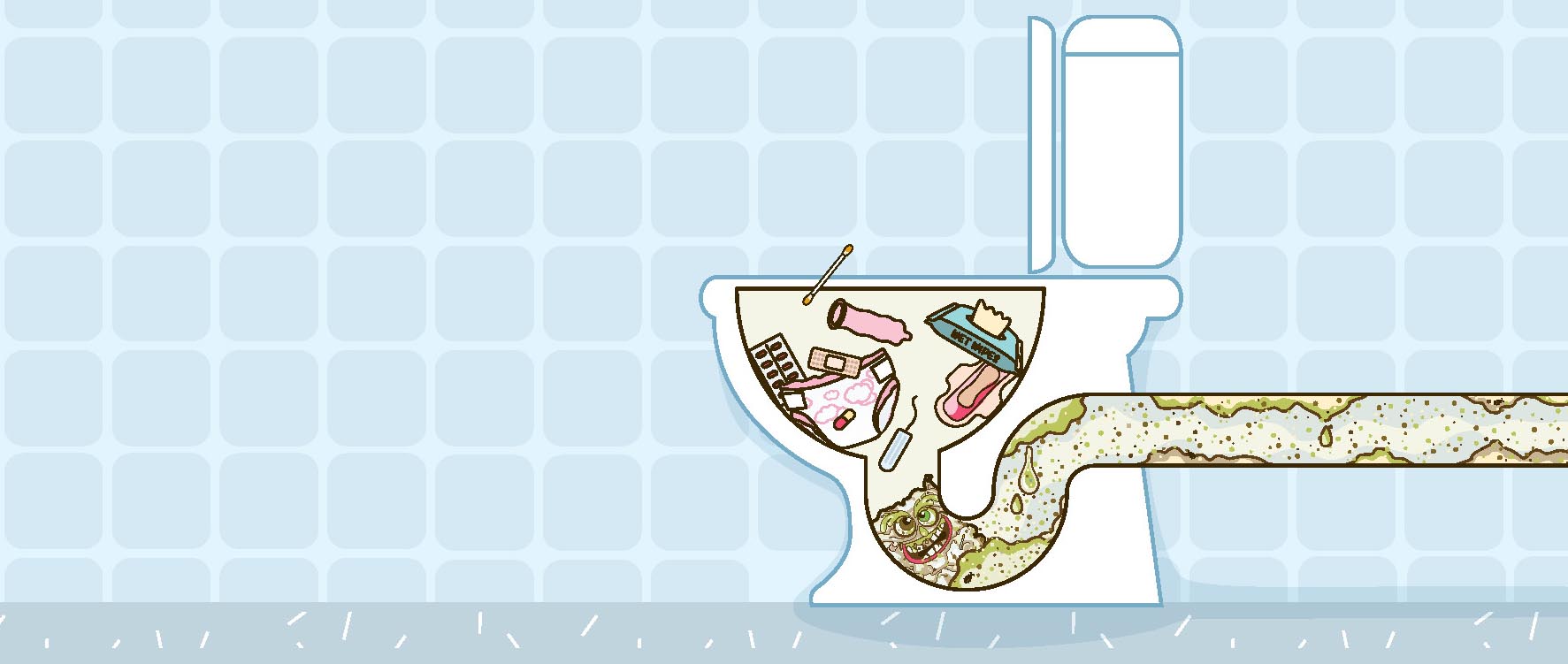
Remember only pee, poo and toilet paper should go down the loo!
Items like wet wipes (including 'flushable'), tissues, paper towels, rags, sanitary items or cotton buds, simply don’t break down and may block your wastewater pipes, which could result in a costly plumbing bill. If you do need to use an alternative to toilet paper such as tissues or wet wipes, wrap them in plastic and place them in the bin.
Flushing these items can also cause overflows in your house, which are extremely damaging to your property and expensive to repair. Residents are responsible for the costs of any blockages on their property. If you dispose of things the right way, you’ll reduce the risk of damaging your wastewater pipes, Council’s wastewater network and the environment, as it could impact our waterways. Logan City Council spends around $2.4 million every year clearing blocked pipes in the wastewater network.
Inappropriate items
Some items that are should not be flushed down the toilet or washed down the sink:
- Wet wipes (including “flushable”) - Wrap and place in the garbage bin
- Tissues - Place in garbage bin
- Paper towels - Place in garbage bin
- Cotton buds - Place in garbage bin
- Sanitary pads - Wrap and place in the garbage bin
- Tampons - Wrap and place in the garbage bin
- Nappies - Place in garbage bin
- Condoms - Place in garbage bin
- Dental floss - Place in garbage bin
- Hair - Place in garbage bin
- Band-aids - Place in garbage bin
- Rags or cloths - Place in garbage bin
- Underwear - Place in garbage bin
In the kitchen
Scrape or collect food scraps, coffee grounds and tea leaves into your general waste or compost.
Cool and seal cooking fats, oil and grease in a container, then bin them. After cooking, wipe pans with paper towel - don’t pour these substances down the sink. Fats solidify and cause serious blockages.
Learn more at Think Before You Sink.
In the garden
Put weed killers, fuels and engine oils in a plastic container and take them to one of our local waste disposal facilities. For information on household chemical drop off days, please see Paint and chemical disposal.
Chemicals that are sprayed or tipped on the ground can be absorbed by household pipes and can affect drinking water.
In the garage and laundry
Chemicals, paint and cleaning products can corrode the pipes on your property and in our network. This can lead to expensive repair bills.
Place unused chemicals, paint and cleaning products in a plastic container and take them to one of our local waste disposal facilities. For information on household chemical drop off days, please see Paint and chemical disposal.